

Professor Abdulfatai Jimoh (BoT Chairman)
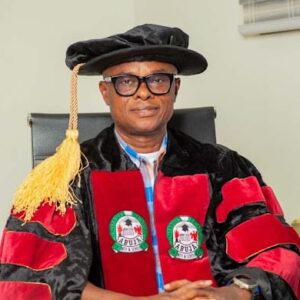 Abdulfatai Jimoh is a Professor of Chemical Engineering with teaching, research, and leadership experience spanning over two decades at local, national, and international levels. Prof. Jimoh holds a Ph.D. in Chemical Engineering from the Witwatersrand University, Johannesburg, South African (2010), M. Eng. and B.Eng. in Chemical Engineering from the Federal University of Technology, Minna, Nigeria in 1998 and 2001 respectively.
He has been involved in encouraging scholarship and scholarly publications, mentoring emerging scholars, and capacity building through teaching and research in the field of Chemical Engineering. He has won academic recognitions and fellowship awards and has authored and co-authored over fifty (50) scholarly publications in reputable journals/conference proceedings, and chapters in books with excellent technical, organizational, interpersonal, and communication skills. He aims to become a successful professional in knowledge generation, dissemination, and application in the field of engineering.
Professor Jimoh is a member of both the Nigerian Society of Chemical Engineers (NSChE) and the Nigerian Society of Engineers (NSE). He is a registered engineer with the Council for the Regulation of Engineering in Nigeria (COREN). He has successfully supervised/co-supervised over twenty-five Master’s students (M.Eng.) and two Ph.D. students, leading to the award of the M.Eng. and Ph.D. to the students. Many of his former students hold positions of responsibility in academia, industry, and government agencies, both within and outside Nigeria.
Dr. Aisah Bello Hassan (Sectary)
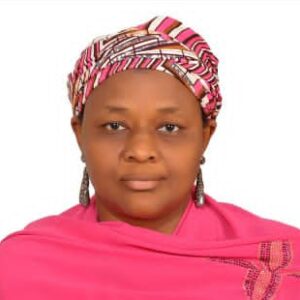 Dr. Aishatu Bello Hassan is an academic staff in the department of Geography F.U.T Minna with teaching, research, and leadership experience spanning almost two decade in F.U.T, Minna. Dr. Aishatu Bello Hassan holds a Ph.D. in Evironmental Management from F in F.U.T, Minn, Masters in Environmental management from B.U.K Kano in 2010 and B.Tech Geography/Remote Sensing from the Federal University of Technology, Minna, Nigeria in 2004 respectively.
She has been involved in encouraging students to secure scholarship and scholarly publications, mentoring emerging scholars, and capacity building through teaching and research in the field of geography GIS and Remote sensing and Environmental Management. He has won academic fellowship awards to Netherlands at Erasmus university at the Indian institute off remote sensing. She authored and co-authored over twenty five (25) scholarly publications in reputable journals/conference proceedings.
Dr. Aishatu Bello Hassan is a member of both the Nigerian Society of Nigerian Society of Geographers (NG).). SHe has successfully supervised/co-supervised 10 Master’s students (M.Tech) and several under grutes students.
Professor Hassan Shuaibu Musa
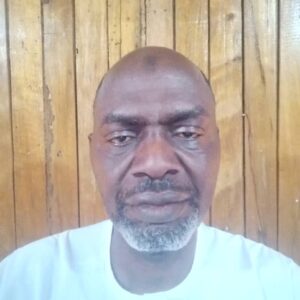 Professor Musa Hassan Shuaib is a Nigerian meteorologist and applied climatologist with over three decades of academic, research, and professional experience in environmental resources planning, climate science, and geography. He holds a PhD in Environmental Resources Planning, an M.Tech in Meteorology, and a B.Tech in Geography/Meteorology, all from leading Nigerian universities. Currently a Professor and Dean of the Faculty of Geography and Atmospheric Sciences at the University of Abuja, he has also served in several leadership roles including Head of Department, Director of the Centre for Environmental Studies, Deputy Director of Distance Learning, and member of the National Universities Commission (NUC) accreditation panel. He is widely affiliated with national and international professional bodies related to geography, meteorology, disaster management, and environmental sustainability.
Professor Shuaib has made significant contributions to climate change research, disaster risk reduction, GIS-based poverty mapping, environmental management, and policy advisory services in Nigeria. He has participated extensively as a consultant, resource person, and team leader on national and international projects supported by institutions such as UNDP, NASRDA, the Federal Ministry of Environment, and several universities and research centers. With over 50 academic publications, numerous technical reports, and regular participation in high-level workshops and conferences, his work has had a lasting impact on climate adaptation, environmental planning, and sustainable development. Beyond academia, he remains actively engaged in community service, editorial work, and capacity-building initiatives, reflecting a career dedicated to both scholarship and societal development.
Obiwole Olatunji
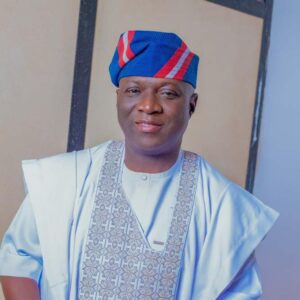 Dr. Obiwole Olatunji Oladotun is a multidisciplinary professional with over two decades of experience in finance, environmental management, and sustainable development. He is currently pursuing a PhD at Ajayi Crowther University, further advancing his expertise in sustainable development and policy.
He holds an MBA in Finance from Ladoke Akintola University of Technology, a PGD in Environmental Management from the Federal University of Technology, Minna, and advanced certification in Project Cycle Management from the Netherlands. His strong academic foundation equips him with a unique blend of financial, environmental, and managerial skills.
Dr. Obiwole has served in strategic roles with UNICEF, the Nigerian High Commission in Namibia, and the Federal Capital Territory Authority (FCTA), contributing to budget administration, impact assessments, project monitoring, and development planning.
As an Environmental Impact Assessment (EIA) Specialist, he has participated in high-profile projects in infrastructure, energy, and health across Nigeria, bringing expertise as a Waste Management, Climate Change, and Socio-Economic Expert.
A member of the Institute of Corporate Administration of Nigeria and the Association for Environmental Impact Assessment of Nigeria (AEIAN), Dr. Obiwole is passionate about climate-smart solutions, renewable energy, and sustainable development across Africa.
Adedoja Folake (Executive Director)
 Adedoja Folake is an environmentalist, researcher and advocate for sustainable agriculture with expertise in environmental management, climate change and women’s empowerment. She is currently pursuing an M.Tech in Environmental Management at the Federal University of Technology, Minna, where her research examines the impact of greenhouse gas emissions from poultry farms in Kuje Area Council, FCT-Abuja. Her study explores agricultural contributions to climate change and highlights mitigation strategies including organic waste conversion, renewable energy adoption and improved waste management.
Beyond academia, she has led over 70 grassroots projects on afforestation, organic agriculture and climate education. Her research interests include climate-smart agriculture, waste-to-resource conversion, environmental impact assessment and GIS applications for sustainable development in Africa.
